


What is biodiversity — and why is it important?
Biodiversity is the variety of life: all plants, animals, fungi and microorganisms, and the way they form an interconnected network. That network is vital. It helps provide crop pollination, clean air and water, and healthy soils. Yet biodiversity is under increasing pressure. Species such as the yellow-bellied toad, the large blue butterfly and the Montagu’s harrier may sound almost mythical, but in reality they are balancing on the brink of extinction.
At the same time, there are also encouraging signs. Some species are doing better than before, thanks to targeted conservation efforts or improved water quality. Examples include the European tree frog, the red-backed shrike, Daubenton’s bat and the twaite shad. Biodiversity Week is the perfect opportunity to highlight this reality and to better understand the true state of biodiversity in Belgium today.
Every observation counts
“We once again want to gain as complete a picture as possible of biodiversity in our country within a single week. During the previous two editions, around 7,000 different species were recorded each time, resulting in nearly one million observations in total. This also led to some remarkable sightings, such as the Eurasian scops owl, the weaver beetle and the barbastelle bat. This year, we are once again aiming for half a million observations. Every observation counts, and everyone can contribute easily,” says Jeroen Denaeghel, spokesperson for the Agency for Nature and Forests.
Participating is simple: register the wild animal and plant species you spot via the free ObsIdentify app by Natuurpunt. “This can be done in a nature reserve or park, but just as easily in your garden or along the street, as long as they are wild plants or animals. During Biodiversity Week, all observations are brought together in one large ‘National Biodiversity Challenge’,” says Wouter Vanreusel of Natuurpunt Study. In this way, a clearer and broader picture emerges of the diversity of fauna and flora in our country. Combined with the data from the previous two editions, the ambition is to make cautious statements later this year about trends and developments in biodiversity.
Increasing knowledge and strengthening public support
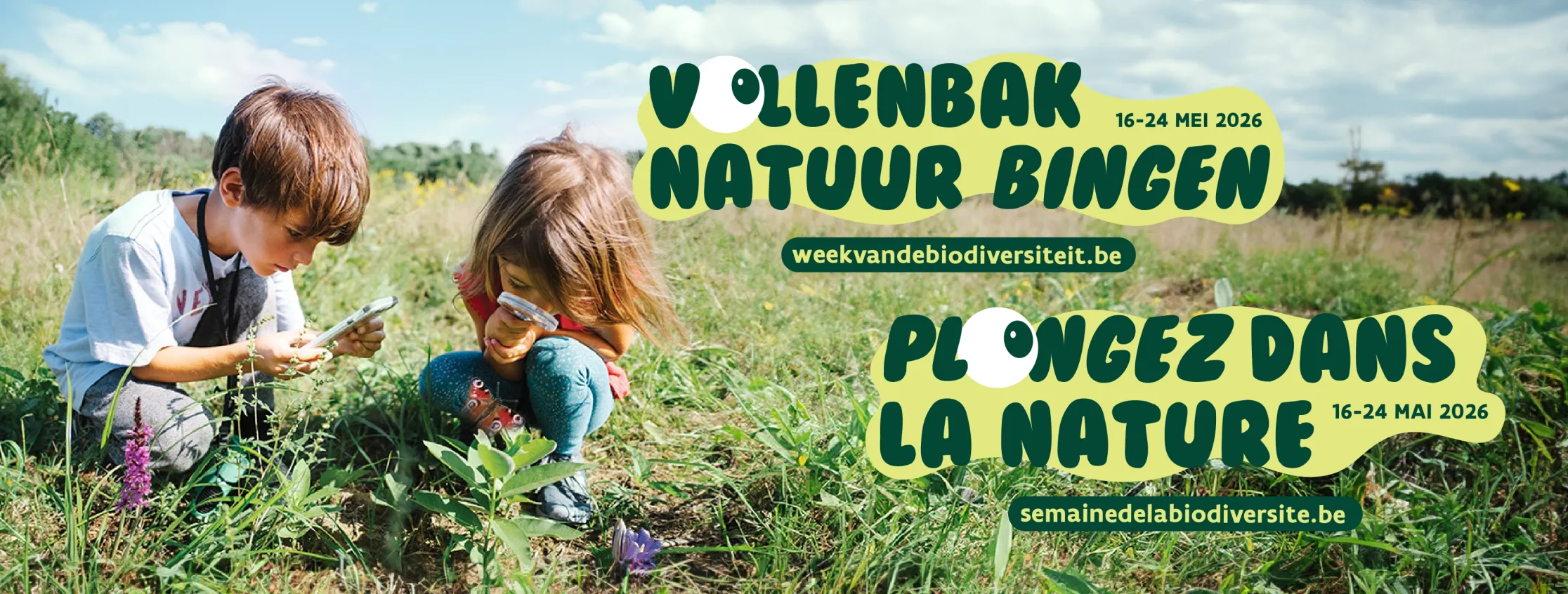
Through the campaign under the slogan “Binge on nature to the fullest”, the partners not only want to map biodiversity more effectively, but also increase public knowledge and support. This is much needed. Because protecting biodiversity starts with awareness. The more people experience nature, the better they learn to understand and respect it — and the greater the willingness to protect it.
Join in, but respect nature
The nature partners ask everyone to respect nature while participating: stay on the paths and do not disturb animals or plants. In addition, a wildfire risk code may be active in nature areas. Please take this into account and always follow local guidelines.