


Since the summer, five farmers have been experimenting with innovative agricultural management on 16 hectares of farmland in Landen and Gingelom. The aim? To provide arable birds with more food and shelter. In doing so, they hope to create an agricultural landscape that also gives biodiversity a fighting chance.
This management approach builds on the existing system of management agreements with the Flemish Land Agency (VLM). These are agreements between farmers and the VLM, whereby farmers manage part of their fields for the benefit of biodiversity in exchange for compensation. Specifically, these are ‘innovative management agreements’: new, experimental forms of land management that are being tested before possibly being permanently included in the existing management agreements.
Strips of grain, legumes and grass-herb fallow
The adapted management is being carried out on regular plots of winter wheat. During the harvest, farmers left 10 to 30% of the grain standing. The remaining stubble was minimally worked and later sown with various mixtures of legumes, specifically serradella, red clover, birdsfoot trefoil, hop trefoil, Persian clover, subterranean clover and microclover. Each plot was managed differently: one farmer sowed the entire field, while another worked with strips that were alternately sown and unsown. This approach aims to create food, an abundance of insects and shelter for species such as skylark, yellow wagtail,... The standing grain provides seeds in winter and spring; the legumes attract insects for the young; and the varied structure offers protection and permeability.
In addition, on one plot, a test is being carried out with grass-herb fallow: after the maize harvest, a grass-herb mixture was sown, with 30% of the plot left fallow. This should attract soil life from which arable birds can benefit.
Because these trials require extra effort and temporary loss of yield, participating farmers receive compensation. This covers, among other things, the unharvested portion of the grain and the adapted use of the plot throughout the year.
The complex needs of arable birds
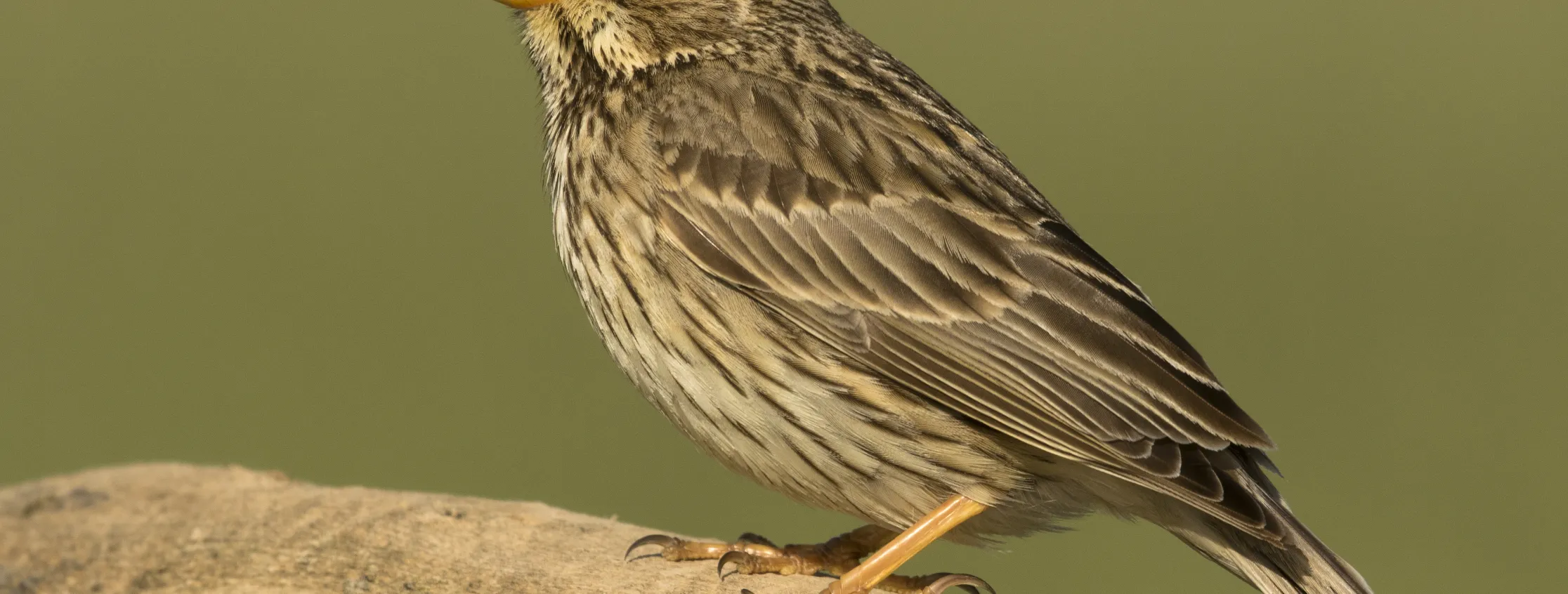
The decline of arable birds in Flanders has been worrying for years. Intensive land use results in less food, fewer nesting opportunities and more disturbance. Moreover, species differ greatly in their specific requirements. For example, skylarks start nesting from the end of April, when the vegetation is about 20 cm high and remains sufficiently open. The yellow wagtail starts a little later, from early May, while the corn bunting does not breed until the end of May, peaking in June – and this species prefers taller and denser vegetation.
Because of these differences, it is a practical challenge to cater to all species at the same time. The innovative management agreements respond to this: after sowing, the plots are no longer worked, so the birds can nest and raise their young undisturbed throughout the breeding season. The combination of standing grain, open stubble areas and low-growing legumes also provides a mix of food, shelter and suitable nesting places.
Cooperation between farmers, nature and government
The measures have been developed through an intensive process of consultation between farmers and the Flemish Land Agency (VLM). First, farmers were individually consulted about the strengths and weaknesses of existing management agreements.
Next came a workshop focusing on practical feasibility. Based on this input, the VLM developed proposals, which were then refined together with the farmers. During the trial year, participants are supported by VLM farm planners. Together with the farmers, they assess the vegetation structure, food supply and effectiveness of the measures for arable birds at various times throughout the year. Good results are rewarded with a bonus on top of the basic compensation.
This experiment serves as inspiration for future, improved management agreements that better address the needs of arable birds and the practicality for farmers.
Learning in the field
In November, farmers, farm planners, policy staff and ecologists went into the field together to observe the first results. The diversity in implementation was great: each farmer gave their own twist to the experiment. This led to valuable exchanges. As one of the VLM farm planners summed it up: “Flexibility is the key word. Farmers themselves can decide how much grain they leave standing and how they sow the legumes. The plot is monitored throughout the year so that we can make timely adjustments.”
Belgium for Biodiversity
The trials are part of the broader LIFE Belgium for Biodiversity (B4B) project, funded by the European LIFE programme. Within this project, various organisations and authorities are working together to strengthen biodiversity in Belgium, including through innovative land management, the Flemish Parks, Natura 2000, education and better policies.
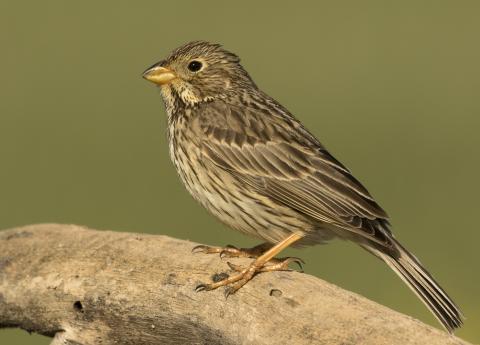
Photo: Rudi Debruyne