


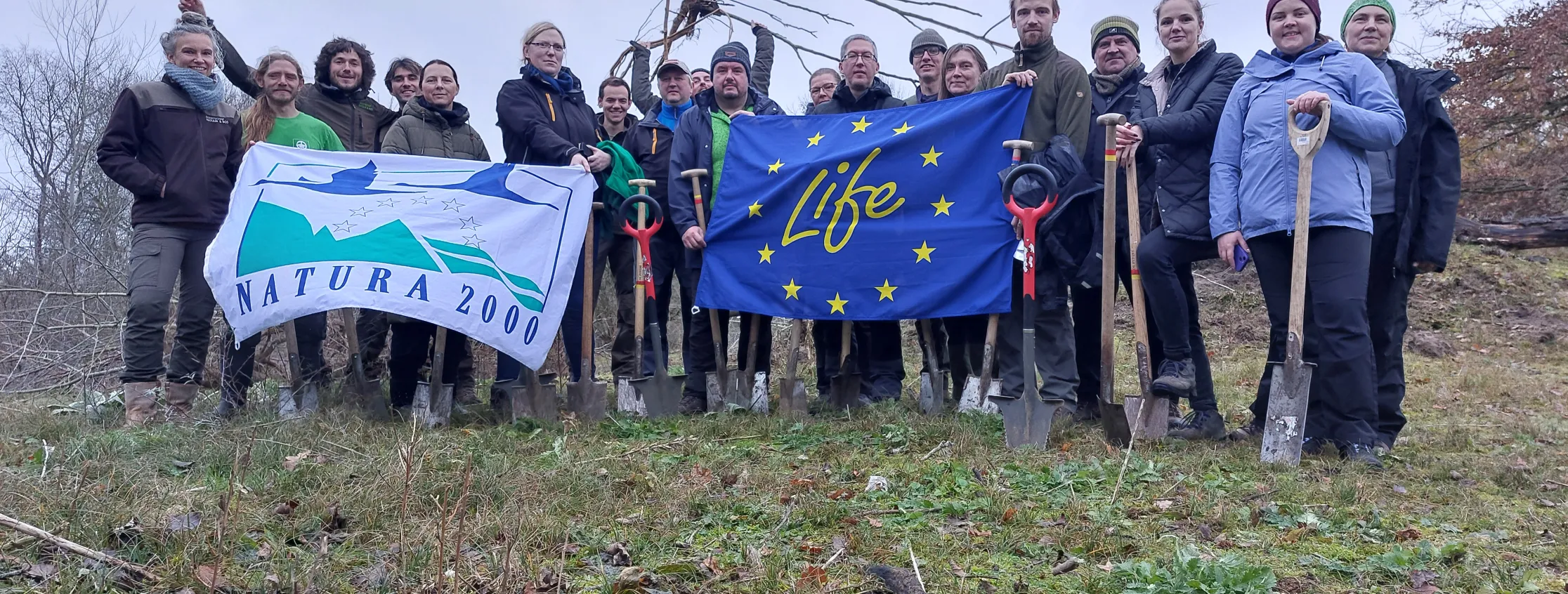
From 24 to 28 November 2025, representatives of 4 LIFE Projects came togheter in Brussels on a knowledge exchange visit to deepen their understanding of invasive species management, eradication methods, and current nature conservation issues. There were 3 Belgian projects and the IP of Latvia.
Three-day programme – from legislation to practical methods
The aim of the exchange was to familiarise with the approach of Belgian institutions and projects to limiting the spread of invasive species, managing habitats, educating the public, as well as to promote cooperation between Latvian and Belgian experts.
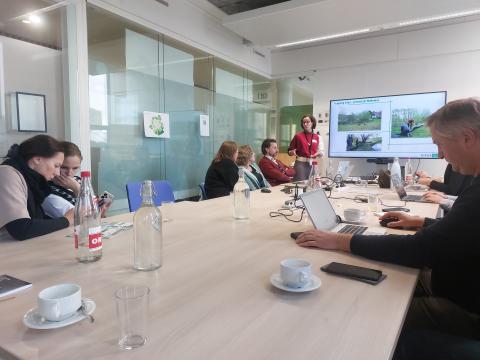
On the first day of the exchange, the Latvian delegation met with the Brussels Environment Agency and representatives of the LIFE Riparias, LIFE B4B and LIFE DunIAS projects. Each country’s regulatory framework and practical approach to managing invasive species were presented, with a focus on future challenges at the European level.
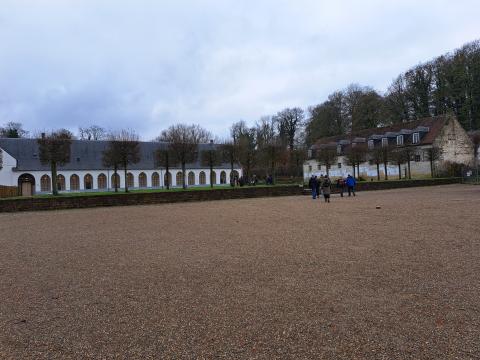
On the second day, specialists visited the pilot sites of LIFE B4B and LIFE Riparias, where they learned about solutions to reduce light pollution for the protection of bats and other nocturnal animals by replacing traditional LED lighting with warm-toned lamps. At the pilot site for the eradication of the invasive water plant – Manchurian wild rice (Zizania latifolia) – a mechanical solution was demonstrated in practice, allowing the local invasion to be eradicated within one year. The day concluded with a visit to the Jean Massart Botanical Garden in Brussels.
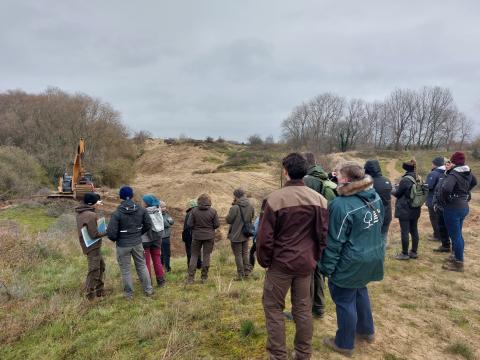
On the final day, the delegation went to the LIFE DunIAS project pilot site in the Koksijde dunes, where the spread of invasive plant species – Rugosa rose (Rosa rugosa), Oregon grape (Mahonia aquifolium) and others – is being controlled. The use of specialised equipment was demonstrated – a soil sieving bucket that extracts roots up to one metre deep. This method not only eradicates invasive plants but also creates open sandy strips, which are beneficial for the restoration of local species with low nutrient requirements.
At the end of the visit, Latvian and Belgian experts participated together in a practical volunteer event in the city of De Panne, manually limiting the spread of White poplar (Populus alba), Tree of heaven (Ailanthus altissima), and Snowberry (Symphoricarpos albus) by digging them out with shovels.
The knowledge exchange trip significantly strengthened international cooperation. Practical knowledge was gained about effective methods for eradicating and limiting invasive species. Information was acquired about innovative technological solutions that can also be applied in Latvia. Understanding was enhanced regarding public involvement, educational approaches, and the importance of communication in nature conservation. New opportunities for collaboration and knowledge transfer between institutions across Europe and LIFE projects have been established.
Photo's: Reinhardt Strubbe